Managing Nut Allergies in Summer: When School Safety Structure Ends
The last day of school for most families is relief. The lunches are done, the permission slips are filed, the year is over. For a family managing a nut allergy, the last day of school is also the day the support structure goes offline.
The 504 plan stays on paper, but the nurse who filed it is not there. The classroom allergy policy that your child's teacher enforced for nine months ends at dismissal. The teacher who knew to seat your kid away from certain snacks, the lunch monitor who checked the birthday cupcake ingredients, the classmate's parents who had already been briefed: these are September-through-June systems. They do not come with you into summer.
Summer is not inherently more dangerous than the school year for a child with a nut allergy. But it is differently dangerous. The risk profile changes, and the preparation that worked in October does not fully carry over.
The School Year Was a Safety System You Built Over Time
It does not feel like a system when you are in it. It feels like a series of individual conversations, documents, and routines. The meeting where you went over the allergy action plan. The note you sent on the first day of school. The birthday snack policy you confirmed with the teacher. The classmate's parent who texted before every class party.
Those conversations created a set of adults who knew the situation and knew what to do. That is what a functional safety system looks like: the people around your child are informed, the environment is predictable, the protocols are in place. None of it required your child to manage the risk alone in the moment, because the adults around them had already absorbed it.
Summer shifts that load back. At a sleepover, a neighborhood cookout, a birthday party in someone's backyard, your child is often the only person present who knows the full picture. The parents hosting may have been briefed once, months ago, or not at all. Other families may not know there is anything to brief them on.
Summer Food Is Different Food
The school cafeteria had a labeled menu. Summer food often does not.
Ice cream from a soft-serve window at the beach. Homemade cookies from a neighbor's kitchen. The snack table at a graduation party. A corn dog from a food truck at a summer festival. The challenge with all of these is that they look like ordinary food in ordinary summer moments, and they do not come with ingredient panels or facility disclosures.
Label reading is a skill allergy families build over years, and it is genuinely effective at the grocery store with packaged products. But a significant share of summer food is either unlabeled (someone made it at home, someone bought it in bulk and discarded the packaging) or informally labeled (a handwritten tag at a farmers market stand). The skills that work at the supermarket have real limits in a July cookout context.
Hidden sources of nuts turn up in more categories than most families initially expect, and many of those categories show up more frequently at informal summer gatherings than at a school lunch. Pestos, trail mix-adjacent snacks, certain granola bars, energy bites that list "mixed nuts" as the third ingredient: these are staple picnic and party foods that require the same scrutiny as anything at the grocery store, but in a setting where asking for the package is often not possible.
The Informal Gathering Problem
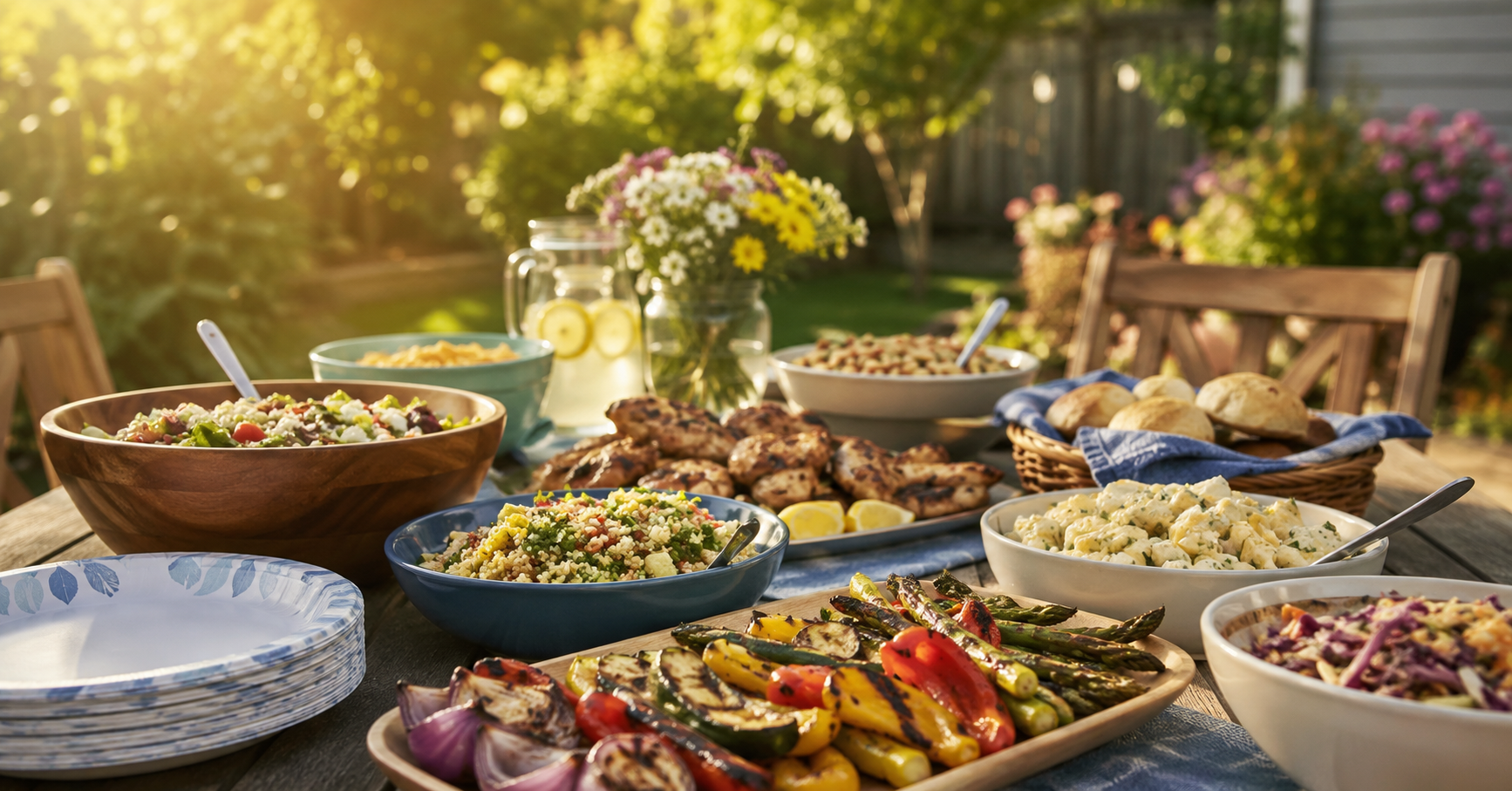
Summer concentrates social life around food settings that carry less structure than most. Birthday parties, block parties, end-of-season team celebrations, and Fourth of July cookouts all involve a host who has put effort into feeding a group of people, and asking detailed questions about preparation can feel uncomfortable in a way that ordering at a restaurant does not.
Restaurants have their own risks and limitations, which we covered in detail when we wrote about navigating restaurants safely with a nut allergy. But at a restaurant there is a formalized interaction: a server or manager whose role includes answering ingredient questions, ideally a kitchen that can be flagged. At a neighbor's backyard party, the host is also managing the grill, the drinks, the kids, and multiple conversations. The context for a thorough allergy discussion is different, and the incentive to actually have it in that moment can work against you.
A few approaches that work better than the food-table conversation:
Bring food. Not as a statement, but as logistics. If your child has a plate of things they brought from home, the pressure to identify what is safe in the buffet line decreases significantly, and your child does not have to stand at the table weighing options while everyone else moves through.
Ask before you arrive, not at the party. A text to the host the day before, not a question at the food table, is both easier to have and more useful. It gives the host time to actually think about what they made and whether there is something specific to flag.
Let older children practice saying the sentence clearly: "I have a nut allergy and I need to check before I eat anything new." Summer is when this skill gets tested in contexts the school year does not prepare them for.
The Snack Problem Across Two Months
Summer travel, road trips, camp drop-offs, and extended stretches of unstructured time all require a snack strategy. The challenge is that summer tends to expand the circle of people your child eats around while reducing the predictability of what will be available.
A packed road trip cooler is one of the more solvable versions of this problem. If you are planning a long drive this summer, knowing which dedicated-facility options travel well before you are two hours from the nearest grocery store matters. We put together a road trip snacks guide for nut-free families that covers what holds up in a cooler and what ships well before the trip.
For the broader summer: having a consistent, reliable snack that your child likes and can bring anywhere is the most practical answer to most informal food situations. A product from a dedicated nut-free facility that your child is already used to eating is something they can have at a party, at camp, in a backyard, without any additional negotiation or explanation. The value of that predictability compounds across two months of unpredictable settings.
Frequently Asked Questions
What food allergy risks are higher in summer than during the school year?
Summer increases risk in a few specific ways: informal social food settings like parties and cookouts where food is unlabeled or the host does not know the full allergy picture; travel to unfamiliar locations where trusted food sources are not nearby; and a reduction in structured adult oversight compared to the school year. These risks are manageable, but they require different preparation than the routines that work from September through June.
How do I talk to a summer camp about my child's nut allergy?
Bring the same documentation that works at school: a written allergy action plan, a signed letter from your allergist, and clear instructions for what to do in an emergency. Ask specifically about kitchen practices, whether they have a dedicated nut-free menu or preparation area, and which staff member is trained and responsible for allergy responses. Get all of this in writing before the first day, not at drop-off.
What should I pack for a summer party when my child has a nut allergy?
A plate of things you know are safe, ideally from dedicated-facility sources your family already trusts. A brownie or snack bar from a nut-free facility looks like a normal party snack, requires no explanation, and eliminates the need to vet everything on the host's table. Bringing something appealing also takes the edge off the social dynamic for your child.
Is it safe to eat from food trucks or outdoor vendors with a nut allergy?
Food trucks and outdoor vendors carry higher uncertainty than grocery store packaged products because they often lack detailed allergen labeling and may not have staff who can answer ingredient questions accurately. If the vendor can specifically confirm that an item does not contain nuts and was not prepared on surfaces shared with nuts, that conversation is worth having. If they cannot confirm it, the safer choice is food brought from a source you already know.
How do I explain my child's nut allergy to party hosts without making it a big deal?
A direct message before the event works better than a conversation at the party. Let the host know your child has a nut allergy, that you will bring safe snacks so they do not need to change their menu, and that a heads-up about any nut-heavy dishes is helpful. Most hosts appreciate the advance notice more than the last-minute conversation. The goal is to give them information, not give them a task.
Summer is one of those seasons where the safest part of any day out is often the part you packed yourself. For dedicated nut-free snacks that travel well and require no conversation at a party table, browse NutFreeMarket.