Food Allergy Awareness Week 2026 | What It Looks Like From Inside the Allergy Community
Every May, for one week, the rest of the world looks up.
Food Allergy Awareness Week 2026 runs May 10 to 16. The official theme, set by FARE and FAACT, is "Invisible No More." Hashtags go up. PSAs get shared. People you haven't spoken to in months send you articles with a quick note: "Did you see this?" Restaurants update their menus with new disclaimer language. Companies run campaigns. Most of it is well-intentioned, and some of it genuinely lands.
But if you're in the allergy community, you also know the week will end on a Sunday. And Monday will look exactly the same as it always has.
What awareness week looks like from outside
From outside the allergy community, FAAW is a moment of visibility for something that usually stays below the surface. People learn things they didn't know. Teachers pay attention. Administrators review policies. The kid's baseball coach actually reads the snack sign-up sheet before he volunteers to bring trail mix. These are real shifts, even if small ones.
The outside perspective on food allergies tends to focus on severity and statistics: how many people, how serious reactions can be. That framing gets people's attention, and it isn't wrong. It just isn't the whole picture of what life looks like when you're in it every day.
What it looks like from inside
From inside the community, FAAW feels less like a turning point and more like a brief visit from the rest of the world. You know what the other 51 weeks look like. The awareness week version is a little softer, a little more sympathetic, and a little removed from the actual work: reading ingredient lists in a grocery store parking lot because the lighting inside was too dim, calling ahead to a restaurant to ask questions you already know the answers to, packing a backup snack for a party where you're not sure what will be served.
None of this feels dramatic. It's just Tuesday, and the community has been doing it so long that it barely registers as unusual anymore.
That's actually the tension underneath the "Invisible No More" theme. The people managing these allergies know exactly how visible the condition is in their own lives. What the theme is really pointing at is more specific: the mental load, the constant low-level calculation, the way a mother of an allergic child can scan a menu or a label or a classroom treat table in about three seconds and nobody watching would ever know what just happened.
The instinct the allergy community builds
One thing that rarely comes up in awareness campaigns is the instinct that develops over time: real, earned, and specific to the situations that build it.
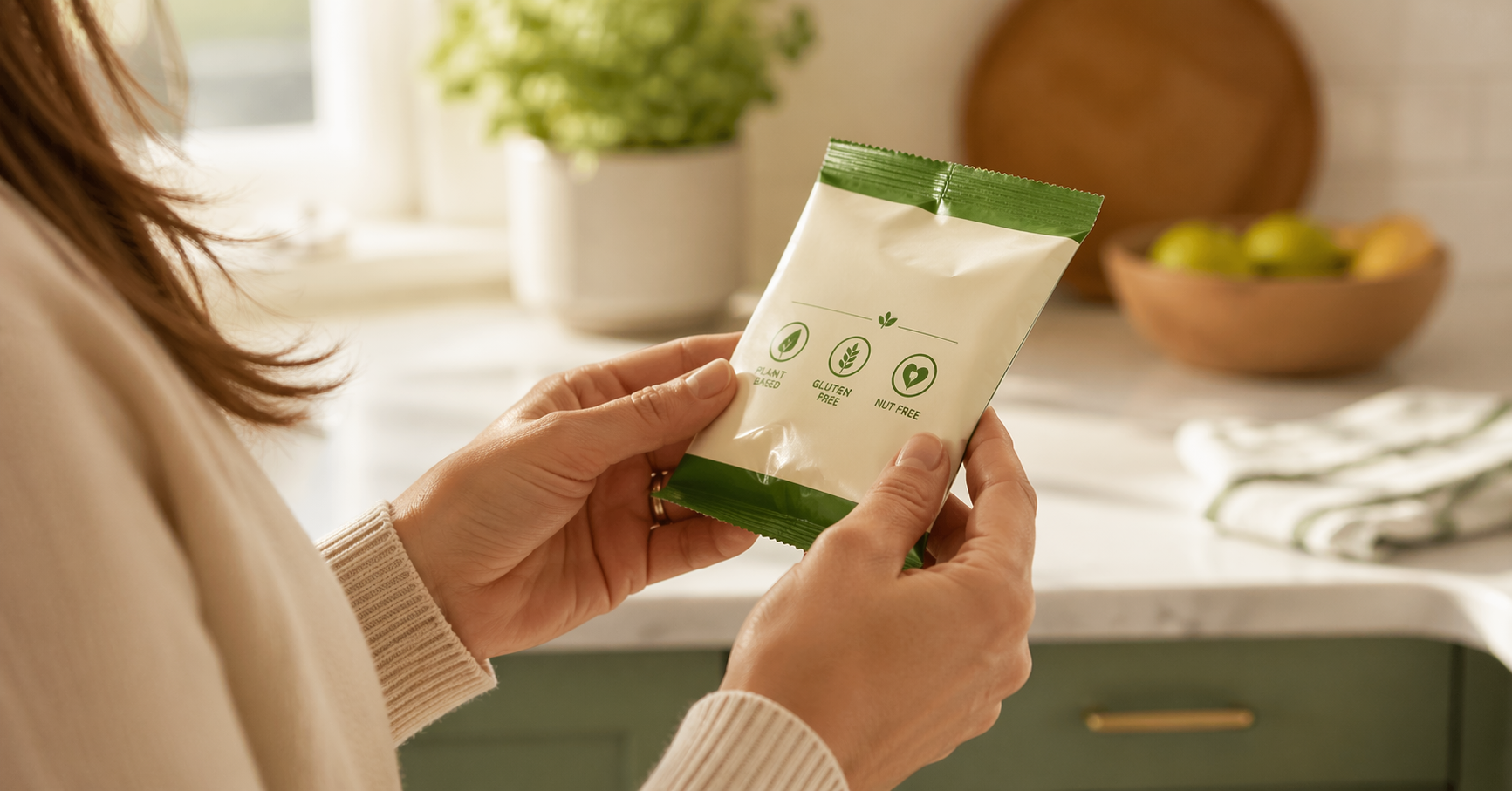
Mothers of allergic kids develop an ability to read signals that have no formal name. When a label looks fine but the allergen statement is vague in a way that doesn't sit right. When a product's packaging changes and you can't tell yet whether the recipe changed too. When a restaurant says "yes, we can accommodate that" with the kind of easy confidence that makes you pause, because a place that genuinely knows how to handle it usually asks at least one more question.
That accumulation is data, earned over years of paying close attention in situations where attention matters. It comes from learning that the label is only part of the picture, and that what happened in the facility before the label was printed matters just as much.
Awareness campaigns describe this instinct from the outside. Experience builds it, over years, in exactly the situations most campaigns only gesture at. The community has it in abundance. What it needs is infrastructure that matches, which is a different ask than a week of visibility.
Where awareness ends and action starts
The "Invisible No More" theme resonates most, from inside the community, as a call for visibility in practice. That means the standards that actually get set and enforced at the places where the community shops, not just the hashtags and PSAs that go up for seven days in May.
NutFreeMarket's core requirement is that every vendor on the platform operates from a dedicated nut-free facility. Not "we clean shared equipment between runs." Not "manufactured in a facility that also processes tree nuts." A facility where peanuts and tree nuts are simply never present. That standard mirrors what the community's instinct has always been pointing at: the label tells you what's in the product, but the facility tells you what was in the building while it was made.
Closing that second question is what turns awareness into action. That requirement is baked into the admission criteria for every vendor and every product listed on the platform, running all 52 weeks.
Awareness week is worth participating in. Share the posts. Have the conversations. Let it do what it does best: make the invisible visible to people who haven't had to see it before.
And for the shopping part, NutFreeMarket already did the work on the other 51 weeks.