The Teal Pumpkin Project 2026: How to Make Your Porch Safe for Every Trick-or-Treater
In 2024, more than 12,500 addresses across all 50 states and 13 other countries put a teal pumpkin on their porch, according to FARE's 2024 Teal Pumpkin Project recap. Each one was a small, specific signal: this house has something for you too, even if you can't eat what's in the other bowl.
The planning window for this year's Teal Pumpkin Project opens in the next couple of weeks, and the houses that decide early tend to be the ones a nut allergy family actually finds on the map come October 31. Here's what the project is, how to do it right, and how to think about the candy bowl too, since plenty of families want to hand out something everyone can eat, not just a non-food alternative.
What the Teal Pumpkin Project Actually Is
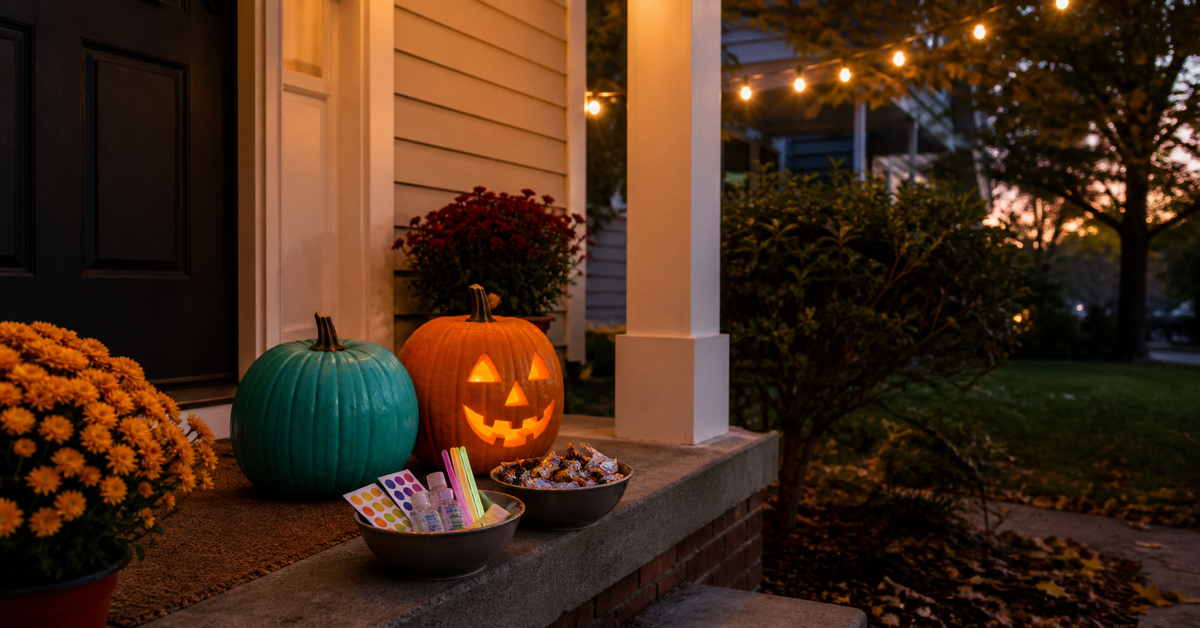
The Teal Pumpkin Project is a Halloween initiative from FARE (Food Allergy Research & Education) that asks households to offer non-food treats, like glow sticks, stickers, or small toys, alongside or instead of candy. A teal pumpkin on the porch, or one of FARE's free printable signs, tells kids and parents the house has an option that doesn't require reading an ingredient label under a flashlight.
The idea started small and became something CVS has backed as the project's exclusive retail partner since 2022, stocking non-food treat options in thousands of stores each fall. In 2024, that meant more than 60 non-food items across over 7,000 CVS locations, per FARE's own recap. The project also picked up a Silver HALO Award that year for best disability initiative, shared between FARE and CVS.
None of that is why it matters to a family walking a neighborhood on Halloween night, though. What matters is being able to tell, from the sidewalk, which houses to ring the bell at without a negotiation on the porch.
How to Participate Without Overthinking It
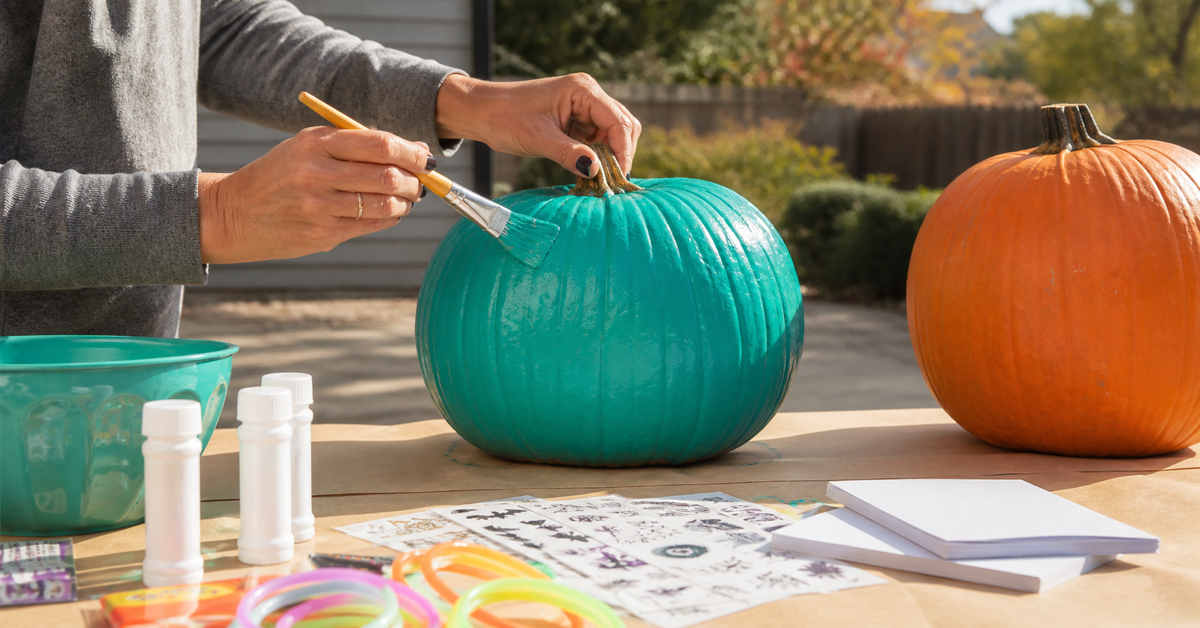
Participating doesn't take much, and FARE's own guidance keeps it to three steps.
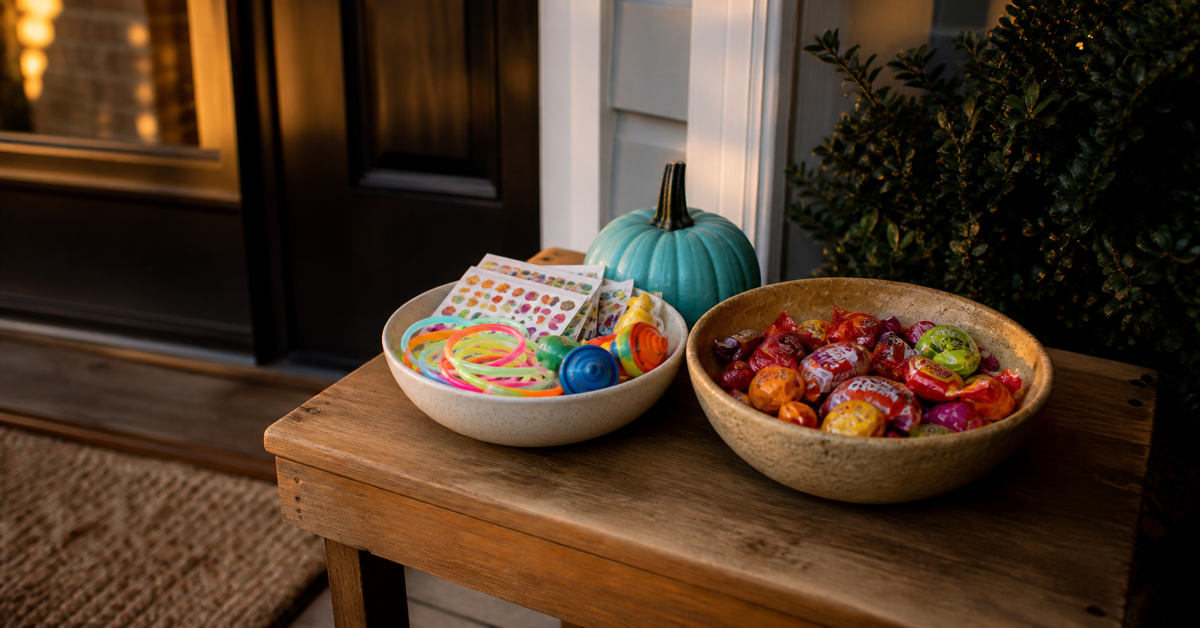
First, stock a small bowl of non-food treats. Options that show up on FARE's ideas for non-food treats list include glow sticks, bubbles, mini coloring books, trading cards, stickers, temporary tattoos, and bookmarks. None of it needs to be elaborate. A dollar-store bin of glow bracelets covers a full night of trick-or-treaters.
Second, mark the house. A teal-painted pumpkin works, but a printed sign taped to the door is just as clear, and faster if Halloween sneaks up on you.
Third, if candy is also part of your night, keep the two bowls separate and let trick-or-treaters choose. FARE's guidance is specific on this point: don't make a child ask for the non-candy option out loud in front of a group of friends. Let both bowls sit out and let the choice be private.
Families looking to find participating houses ahead of time can check the Teal Pumpkin Project Map, where FARE lets anyone add their address for the season. It's the same map that logged over 12,500 pins in 2024, and route-planning off it ahead of time is one of the more useful things a parent can do, rather than trying to figure it out on the sidewalk that night.
If You're Also Handing Out Candy, the Facility Matters More Than the Label
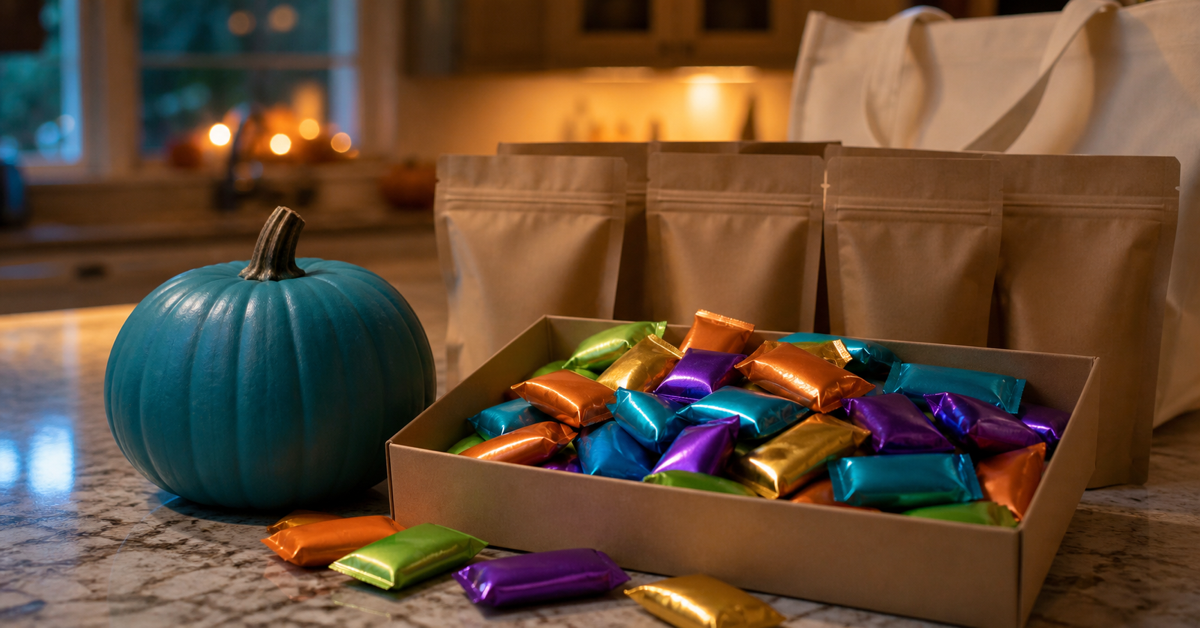
A lot of households do both: a non-food bowl for the Teal Pumpkin side, and a candy bowl for everyone else. That second bowl is worth a closer look if there's any chance a nut allergy kid in your own family, or your own porch line, is choosing from it.
"May contain" and "processed in a facility with" labels are common on mainstream Halloween candy precisely because so much of it is made on shared lines. That's a different safety profile than candy from a dedicated nut-free facility, where peanuts and tree nuts were never in the building to begin with. If your own child trick-or-treats and comes home to sort a pillowcase of candy on the kitchen floor, having a stocked, already-safe stash to swap in makes that sorting ritual a lot less tense. NutFreeMarket put together a running list of dedicated-facility Halloween candy worth checking before the season gets busy.
And if you're the neighbor without a nut allergy in the house, wondering whether any of this is really your problem to think about: it's a small ask with an outsized effect. What friends and family can actually do to support someone with a nut allergy covers this exact kind of everyday accommodation, and a Halloween porch is one of the easiest places to practice it.
Why Two Weeks From Now Is the Right Time to Start
FARE's own numbers show participation climbs fast once the map opens for the season, and a pin added in mid-August shows up on a family's route-planning searches for the full two months leading into Halloween, not just the last week of October. Waiting until the week of the holiday to buy a bag of glow sticks and tape up a sign still works, but it means your house shows up on nobody's plan in advance. Early is what makes a porch findable instead of just lucky.
Frequently Asked Questions
What is the Teal Pumpkin Project?
It's a FARE initiative that encourages households to offer non-food treats, marked with a teal pumpkin or sign, so trick-or-treaters with food allergies have a safe option that doesn't depend on reading a candy label in the dark.
Do I have to only give out non-food treats?
No. Many houses offer both. FARE recommends keeping non-food and food treats in two separate bowls so kids can choose privately, without announcing an allergy to a group of friends on the porch.
What are good non-food treats to hand out?
Glow sticks, bubbles, stickers, temporary tattoos, small coloring books, trading cards, and bookmarks are common choices. FARE keeps an updated list of ideas for non-food treats on its website.
How do I find houses participating in the Teal Pumpkin Project near me?
FARE maintains a public Teal Pumpkin Project Map where households can add their address each season, so families can plan trick-or-treating routes in advance.
Is dedicated-facility candy different from candy that just avoids nuts in the ingredient list?
Yes. A dedicated nut-free facility means peanuts and tree nuts are never present anywhere in the building, not just absent from that specific product's ingredient list. Candy made on shared lines can carry "may contain" or "processed in a facility with" warnings even when nuts aren't a listed ingredient.