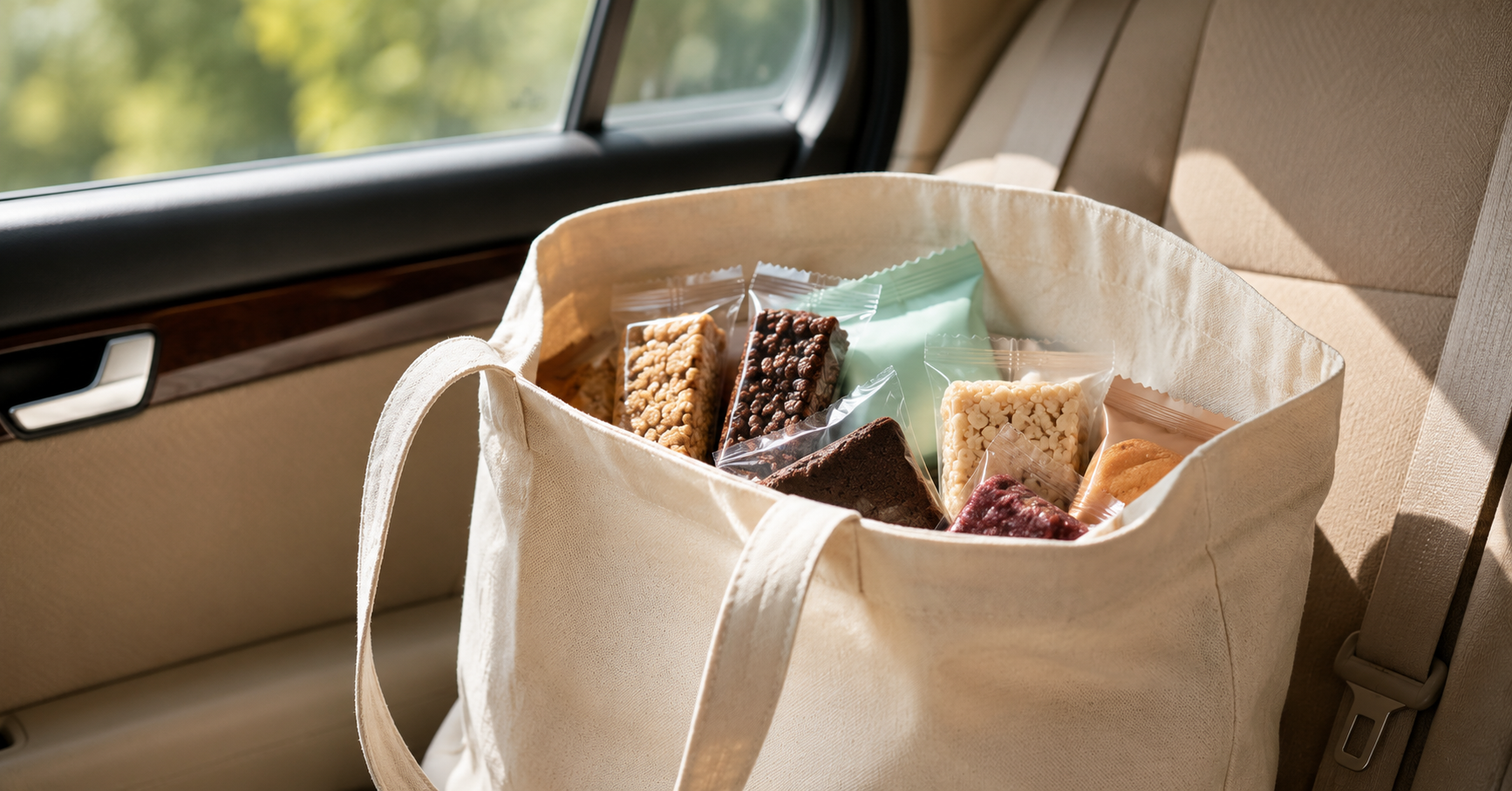
Nut-Free Road Trip Snacks 2026: Dedicated-Facility Options for Summer Travel
It happens somewhere between the third hour and the fourth. The snacks you packed are gone, the kids are hungry, and the next rest stop is twelve minutes away. You already know what's waiting there: a rack of trail mix, a wall of mixed nuts, a shelf of candy bars with advisory labels on the back of every one. Planning nut-free road trip snacks before you leave the driveway is the single most reliable way to make sure that stop stays optional.
Road trips with food allergies are not impossible. They are a logistics problem, and the families who handle them best treat them like one.
Why Rest Stops and Gas Stations Are Structurally Hard
Rest stop snacks present a structural problem. The products that don't directly contain nuts almost always carry advisory labels documenting potential cross-contact during manufacturing: "Made in a facility that also processes peanuts" or "May contain tree nuts." These disclaimers are accurate descriptions of production environments where shared equipment or adjacent lines make allergen cross-contact a real possibility.
At home, families with nut allergies have the time to research manufacturers, check facility certifications, and build a short list of brands they trust. On the road, at a vending machine, with a hungry seven-year-old, none of that is possible. The only reliable answer is to arrive with enough that the gas station stays decorative.
For a fuller picture of where unexpected exposures tend to happen on travel days, our guide to hidden sources of nuts you might not expect is worth a read before you pack.
What "Dedicated Facility" Means When You're Packing for a Drive
For families managing serious peanut or tree nut allergies, the distinction between a product with a nut-free label claim and one manufactured in a dedicated nut-free facility is the most important sourcing detail there is. A dedicated facility is one where peanuts and tree nuts are simply not present in the building. There is no cleaning protocol to verify, no adjacent line to worry about, no shift-change risk on shared equipment.
The "may contain" language covering most conventional products exists precisely because dedicated facilities are the exception. Most food is made in environments where multiple products share equipment, and the advisory label reflects that reality. When a brand manufactures in a dedicated facility, that disclaimer disappears because the risk it describes does not exist.
This matters more on a road trip than it does at home. When you are tired, when the kids are restless, when the stop is rushed, you want snacks where the safety has already been built into the product. A label to decode at a highway rest stop is a problem you do not want to solve at that moment.
What Actually Travels Well
Summer heat is the first filter for road trip snacks. Temperature-sensitive baked goods and chocolates can soften or melt during a long drive, especially in a car that's been in direct sun. The snacks that work best for road trips tend to share a few qualities: individually wrapped, shelf-stable at warm temperatures, and substantial enough to actually satisfy.
Rule Breaker Snacks makes plant-based bars and brownies in a dedicated nut-free facility. They are compact, individually wrapped, and hold up at room temperature without refrigeration. Browse Rule Breaker Snacks on NutFreeMarket.
Alio produces snacks from a dedicated facility with a lighter profile that works well as a between-meal option. Browse Alio on NutFreeMarket.
Muddy Dog Snacks rounds out the roster with dedicated-facility options that travel cleanly. See Muddy Dog Snacks on NutFreeMarket.
Building the Road Trip Snack Kit
The goal is three distinct snack categories: something for sustained energy, something lighter for between-meal grazing, and something sweet that reads as a treat rather than a fallback.
Pack more than you think you need. A reasonable guideline is one dedicated snack per person per two hours of drive time, plus a full backup set. For an eight-hour drive with two kids, that means ten snacks minimum before adult snacking is factored in.
Individual packaging matters more in a car than it does at home. Open containers invite shared hands, spills, and the kind of incidental cross-contact that dedicated-facility sourcing was designed to prevent upstream. Single-serve packaging keeps things clean and simple to manage mid-drive.
For longer trips, a designated bag or small cooler for the allergy-safe snacks, kept separate from any conventional foods in the car, removes ambiguity for everyone. The kids know which bag is theirs. The parent driving can answer "is this safe?" without pulling over.
If this summer also includes flights, the logistics shift slightly. Our guide to nut-free air travel covers what to pack for flights, how to communicate with airline staff, and how to handle gate areas where nut-containing snacks are open.
Frequently Asked Questions
What are the best nut-free snacks for road trips?
The best road trip snacks for nut allergy families come from manufacturers operating dedicated nut-free facilities, meaning peanuts and tree nuts are not present in the building at all. Shelf-stable, individually wrapped options are the most practical for car travel. NutFreeMarket carries several dedicated-facility brands well suited for summer travel, including Rule Breaker Snacks, Alio, and Muddy Dog Snacks.
How do I find nut-free snacks at gas stations and rest stops?
It is genuinely difficult. Most rest stop snacks carry "may contain" advisories because they are manufactured in facilities that also process nuts. The most reliable approach is to pack enough dedicated-facility snacks from home that you do not need to rely on what is available at rest stops.
Are "may contain peanuts" labels safe for someone with a serious nut allergy?
The FDA describes "may contain" as a voluntary advisory label indicating potential cross-contact during manufacturing. Families managing serious nut allergies generally avoid these products and seek out dedicated-facility options where that cross-contact risk does not exist.
Can I bring nut-free snacks on a plane?
Yes. Standard TSA rules for solid food apply: solids can go in carry-on or checked bags. Packing your own dedicated-facility snacks is the most reliable way to have safe food available during a flight.
How much should I pack for a road trip?
A practical guideline is one snack per person per two hours of driving, plus a full backup set. For an eight-hour drive with two children, that means at least ten allergy-safe snacks before adult needs are factored in. Packing more than you expect to use is almost always the right call.