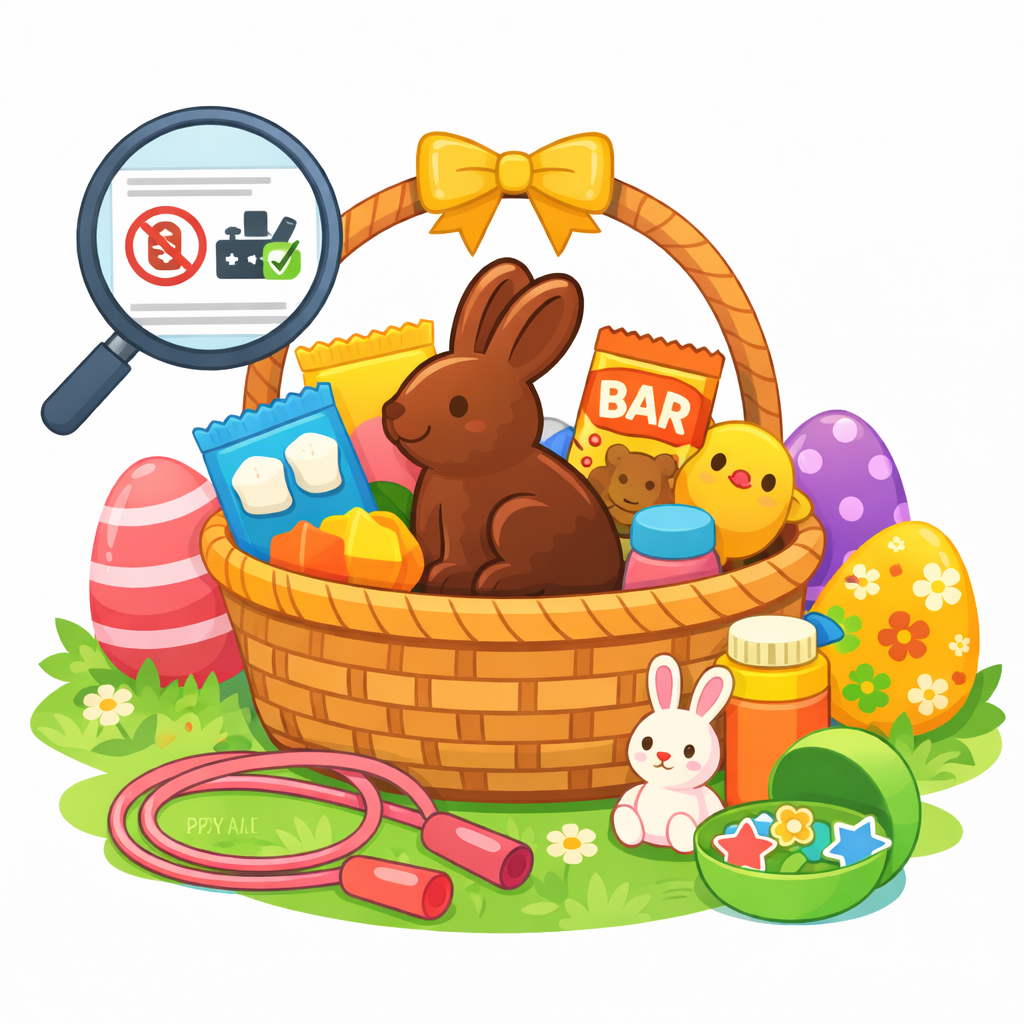
Nut-Free Easter Basket Guide: Safer Treats, Smarter Label Checks, and Low-Stress Ideas for Allergy Families
A parent stands in the seasonal aisle holding two shiny chocolate bunnies: one wrapped in pastel foil, one in a clear bag with a long ingredient list. The store speaker is playing something springy, the shelves are loud with color, and none of it answers the real question: Is this actually safe, or does it just look safe? For families managing peanut or tree nut allergies, Easter baskets can feel less like a cute tradition and more like a short, intense risk assessment.
This guide focuses on what tends to matter most to allergy families: reducing cross-contact risk, choosing treats with clearer labeling, planning for school and community events, and building baskets that feel fun (not restrictive).
What “nut-free” should mean (and what it does not)
For packaged foods in the U.S., allergen labeling rules help, but they do not eliminate guesswork.
- Peanut and tree nuts are “major food allergens” that must be declared on FDA-regulated packaged foods when they are ingredients. The U.S. now recognizes the “Big 9” allergens: milk, egg, fish, crustacean shellfish, tree nuts, peanuts, wheat, soybeans, and sesame. See the FDA overview and major allergen list, plus sesame under the FASTER Act requirements: FDA food allergies information and FASTER Act sesame labeling.
- “May contain” and similar advisory statements are voluntary. They can be helpful signals, but they are not standardized safety guarantees. FDA has discussed cross-contact and allergen labeling enforcement approaches in guidance and policy documents, including a draft compliance policy guide focused on cross-contact and labeling: FDA policy and cross-contact guidance context and FDA allergen labeling guidance FAQ
Practical takeaway: for an Easter basket, “nut-free” is usually safest when it is backed by clear allergen statements, transparent manufacturing info, and strong brand practices to prevent cross-contact, not just “no nuts listed.”
The hidden Easter risks that catch families off guard
1) Seasonal candy is often made on shared lines
Holiday assortments, mini versions, and “special shapes” may be produced differently than the standard bar. Even within the same brand, manufacturing can vary by product and season.
2) Classroom and community events create cross-contact pathways
Egg hunts, shared bowls of candy, and “grab bags” introduce a big variable: other people’s food. Public health guidance for schools commonly recommends steps like discouraging food sharing/trading and strengthening cleaning and handwashing routines to reduce exposure risk. See CDC resources on school food allergy management: CDC managing food allergies in schools and broader guidance: CDC voluntary guidelines.
3) “Non-food” items can still be food-adjacent
Play dough, lotions, and craft kits can contain nut-derived ingredients or be handled after snacks. Basket planning should treat non-food items as potentially relevant if a child touches them and then touches their mouth.
A step-by-step system for building a safer nut-free Easter basket
Step 1: Start with the “rules of the basket”
Write these down before shopping. It prevents impulse buys.
- Only items with complete ingredient lists (no bulk-bin candy, no unwrapped treats).
- Avoid items with unclear manufacturing if the child is highly sensitive or has had severe reactions.
- Choose items that can be individually packaged (reduces cross-contact during events and storage).
- Decide how strict to be about advisory statements (“may contain,” “processed in a facility…”) based on the child’s history and clinician guidance.
Step 2: Read labels like it is a skill (because it is)
A quick label scan misses the most common pitfalls: alternate names, seasonal variations, and “contains” statements that do not match what the eye expects.
Use a repeatable method:
- Check the Contains statement (if present).
- Read the full ingredient list anyway.
- Look for cross-contact cues (advisory statements, facility info, “made on shared equipment” language).
- If anything is unclear, do not guess. Choose a different product or contact the manufacturer.
For a deeper walkthrough, use NutFreeMarket’s label guide: how to read food labels for hidden nuts.
Step 3: Reduce cross-contact at home while assembling the basket
Cross-contact is one of the most preventable risks. Food allergy organizations emphasize basics like washing utensils and using separate tools and surfaces where needed: FARE avoiding cross-contact
and a practical prevention handout: FARE cross-contact tips PDF.
Basket assembly checklist:
- Wash hands and wipe the counter first.
- Use a clean cutting board and clean scissors for packaging.
- Keep “safe basket items” separated from other household snacks.
- If siblings have different allergens, assemble baskets separately.
Step 4: Plan for the “outside the house” basket moment
Many children eat Easter candy at a party, a relative’s home, or a school event. Build the basket with that reality in mind.
Add:
- A small zip pouch labeled “SAFE TREATS” that can go to events.
- Individually wrapped options that can be swapped for unknown candy.
- A simple “trade card” for younger kids: “If you’re not sure, bring it to an adult.”
Schools and group settings often rely on fast access to emergency medication and clear plans. CDC guidance for staff includes readiness to administer epinephrine and activate emergency response when a reaction is suspected: CDC teacher guidance PDF
. Clinicians and allergy organizations also emphasize that epinephrine is the first-line treatment for anaphylaxis, not antihistamines: ACAAI epinephrine guidance
and FARE epinephrine overview.
Nut-free Easter basket ideas that feel fun (not “the allergy basket”)
Treat ideas (choose based on labeling confidence and household rules)
The safest strategy is to prioritize products with clear allergen controls and transparent manufacturing, especially for kids with a history of severe reactions.
Basket-friendly treat formats that often work well:
- Individually wrapped cookies or snack packs
- Mini granola-style bars made in nut-free facilities (if oats and other allergens are tolerated)
- Gummies or chewy candies with clear allergen statements
- Marshmallows, fruit snacks, or dried fruit with straightforward ingredient lists
If seasonal chocolate is included, select brands/products with explicit nut-free manufacturing statements that align with the child’s risk profile. If the labeling is vague, skip it.
Non-food basket fillers (often the easiest win)
Non-food items can make the basket feel abundant without adding label stress.
Options that work across ages:
- Stickers, temporary tattoos, spring-themed patches
- Sidewalk chalk, bubbles, jump rope
- Mini puzzles, card games, fidget toys
- Bath toys, watercolor sets, small LEGO-style kits
- A spring book (board book or early reader)
Tip: If including lotions or bath products, check for ingredients like almond oil or shea derivatives depending on sensitivities, and follow clinician guidance.
“Egg hunt safe kit” add-on
For kids attending group egg hunts:
- 6 to 10 plastic eggs filled with pre-approved treats or non-food prizes
- A brightly colored “SAFE” bag for collecting eggs
- A post-hunt swap rule: all candy is checked before eating
This reduces the pressure of saying “no” in the moment because there is already a “yes” option ready.
Where NutFreeMarket fits in
For families who want to avoid the guessing game, shopping within a marketplace focused on products made in dedicated nut-free facilities can reduce the search time and the constant second-guessing.
A practical starting point for Easter basket planning is NutFreeMarket’s seasonal picks: Spring Favorites collection. Use it to build a basket baseline, then add non-food fillers and event-ready “safe swaps.”
To learn more about the makers behind nut-free products and what to look for in facility practices, see: meet the NutFreeMarket innovators.
For families newer to food allergy management or updating routines before a holiday-heavy season, these guides also help:
Frequently Asked Questions
What candy is safe for a nut-free Easter basket?
There is no universal “safe candy” list because ingredients and manufacturing can change by product and season. The most reliable approach is choosing items with clear allergen labeling and manufacturing transparency, then re-checking labels every time. The FDA outlines how major allergens like peanuts and tree nuts must be declared when they are ingredients: FDA food allergies overview.
Are “may contain peanuts/tree nuts” labels required?
No. Advisory statements like “may contain” are voluntary and not standardized across manufacturers. They can signal cross-contact risk, but the absence of an advisory statement is not proof of safety. FDA discusses allergen labeling expectations and cross-contact considerations in guidance and policy materials: FDA allergen labeling guidance FAQ.
Should a child with nut allergies avoid all chocolate at Easter?
Not necessarily, but chocolate is a common cross-contact risk because it is frequently produced on shared equipment with nut-containing products. Decisions should be based on the child’s reaction history and the specific product’s labeling and manufacturing information. When in doubt, choose non-chocolate treats or individually wrapped alternatives with clearer allergen controls.
What is the best way to handle Easter egg hunts with food allergies?
Use a “safe swap” strategy: the child collects eggs, but only eats treats that are pre-approved. Many families bring a separate “safe treats” bag or provide pre-filled eggs. In group settings, guidance often includes discouraging food sharing and maintaining cleaning and handwashing routines to reduce accidental exposure: CDC school food allergy resources.
What should be in an allergy-safe Easter basket besides candy?
Non-food items are often the easiest way to create a fun, full basket without label uncertainty: stickers, bubbles, small toys, crafts, books, and games. Individually packaged snacks can be included if labels and manufacturing information meet the household’s risk threshold.
What should parents do if a reaction happens during an Easter event?
Follow the child’s emergency plan and use prescribed emergency medication as directed. Medical organizations and food allergy resources emphasize that epinephrine is the first-line treatment for anaphylaxis: ACAAI epinephrine guidance
and FARE epinephrine overview. Call emergency services immediately per plan and local guidance.
Does “nut-free” mean free from cross-contact risk?
Not automatically. “Nut-free” can refer to ingredients, facility practices, or marketing language. The practical goal is reducing risk by choosing products with strong allergen controls and by preventing cross-contact during storage, preparation, and events. Cross-contact prevention steps are outlined by food allergy organizations: FARE avoiding cross-contact.
Disclaimer
This article is for general educational purposes only and does not provide medical advice. Food allergy risk varies by individual, and product ingredients and manufacturing practices can change at any time. Always read labels on every purchase, follow the guidance of a qualified clinician, and use the child’s prescribed emergency plan and medications. If an allergic reaction is suspected, seek emergency medical care immediately and follow clinician instructions for epinephrine use.