How to Travel Nut-Free: Airline, Hotel & Food Tips for Nut-Allergic People
Traveling with a nut allergy can be stressful, but with the right preparation you can stay safe and enjoy your journey.
Table of Contents
- Why Pre-Travel Planning Matters
- Airline Travel Tips
- Hotel & Accommodations Safety
- Dining, Grocery & Local Food Advice
- Emergency Preparation & Documentation
- Common Questions (FAQs)
1. Why Pre-Travel Planning Matters
- Airline policies, food labelling, and kitchen practices vary greatly between countries. What’s safe at home might be unsafe abroad.
- Being proactive reduces risk of accidental exposure, allergen cross-contact, and improves overall experience.
2. Airline Travel Tips
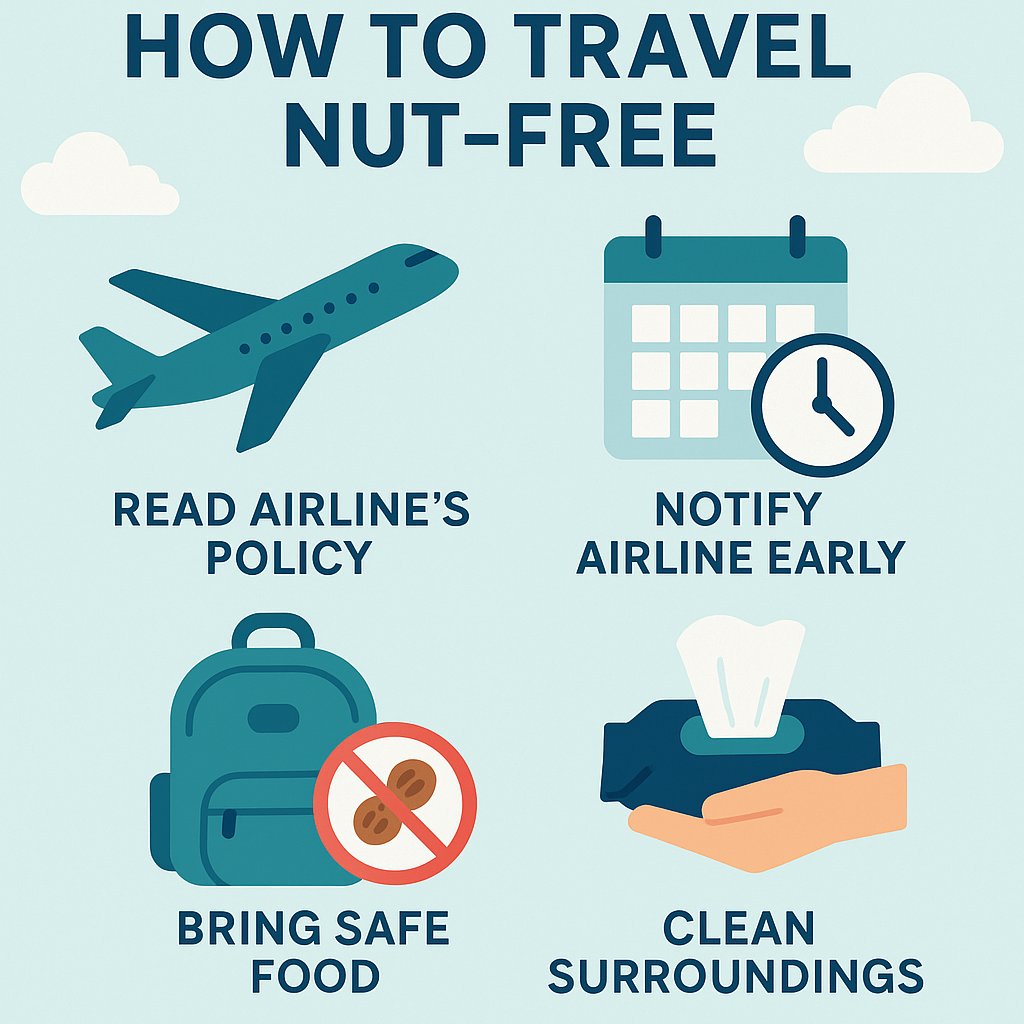
- Start by reading your airline’s food allergy policy. Some airlines still serve nuts, while others may have restrictions. Don’t rely on assumptions—check the official policy online, then call to confirm. If possible, notify the airline in advance so they can note your allergy in your booking and sometimes even make small accommodations, like cleaning your seat area or pausing nut service nearby.
- Timing matters. Choosing the first flight of the day can reduce your risk because the plane is usually cleaner and has had less food service before you board. Wiping down your tray table, armrests, and seat belt with disinfectant wipes is also strongly recommended.
- Bring your own safe food. Airline meals and snacks often contain hidden nut ingredients, and airport food can be unreliable. Packing your own non-perishable nut-free snacks gives you peace of mind.
- Clean your immediate surroundings. Allergens are more likely to be picked up from surfaces than from the air. Studies show there’s no evidence that nut allergens spread through airplane ventilation systems, but residue on tray tables and seats is a real risk. Wipe everything down before settling in.
- In short, planning ahead, notifying the airline, flying early, packing safe snacks, and cleaning your space are the best ways to reduce risk and fly safely with a nut allergy.
3. Hotel & Accommodations Safety
- Housekeeping communication: Inform the hotel in advance about your allergy. Request cleaning of surfaces, remove any snacks/minibars with nuts.
- Kitchen & room service caution: If the hotel kitchen serves nuts, cross-contact risk is high. Consider using microwave or toaster cleaned well.
- Buffets: Avoid buffets or ensure staff can confirm which foods are safe. Buffets often have shared utensils and cross-contamination.
- Translation or allergy cards: Keep cards in the local language that state your allergy (e.g. “I am allergic to peanuts / tree nuts”) so staff understand.
4. Dining, Grocery & Local Food Advice
- Know local cuisine: Some cuisines use peanut, tree nuts, or nut oils pervasively. Even when not obvious, sauces, garnishes, oils may contain nuts.
- Ask questions: Always ask the server/chef about ingredients & cross contact. Use translation where needed.
- Check labels carefully: Different countries have different labelling rules. What is required in one place may not be in another.
- Pack safe staples: Things you know are safe (snacks, spreads etc.) so you have fall-backs.
5. Emergency Preparation & Documentation
- Carry medications & prescriptions: Epinephrine auto-injectors, antihistamines. Bring extras.
- Bring your emergency care plan: Written plan describing what to do in case of exposure, symptoms etc.
- Doctor’s note: Handy if customs or security ask; or if you need medical care abroad.
- Know local medical facilities: Before selecting destination, check where allergy specialists or emergency hospitals are.
6. Common Questions (FAQs)
Q: Can airborne nut particles on a plane trigger severe reactions?
A: Evidence suggests the risk from airborne allergens via ventilation is very low. The main risks are from allergen residues on surfaces (tray tables, seats) or ingestion. A recent study found no evidence that nut allergens spread through aircraft ventilation systems.
Q: Is it safer to choose certain countries because their cuisine is more nut-free?
A: Some countries have less common use of nuts in many dishes (e.g. many European countries). But even in nut-rare cuisines, certain dishes or desserts may still use nuts—so due diligence is always needed.
Q: What if language is a barrier?
A: Use translation cards to convey your allergy in the local language. Also use digital translators. Always double check with hotel or restaurant staff.
Closing Thoughts
Travel doesn’t have to be terrifying for those with nut allergies. With proper planning, documentation, and vigilance, you can minimize risk and enjoy your trip.