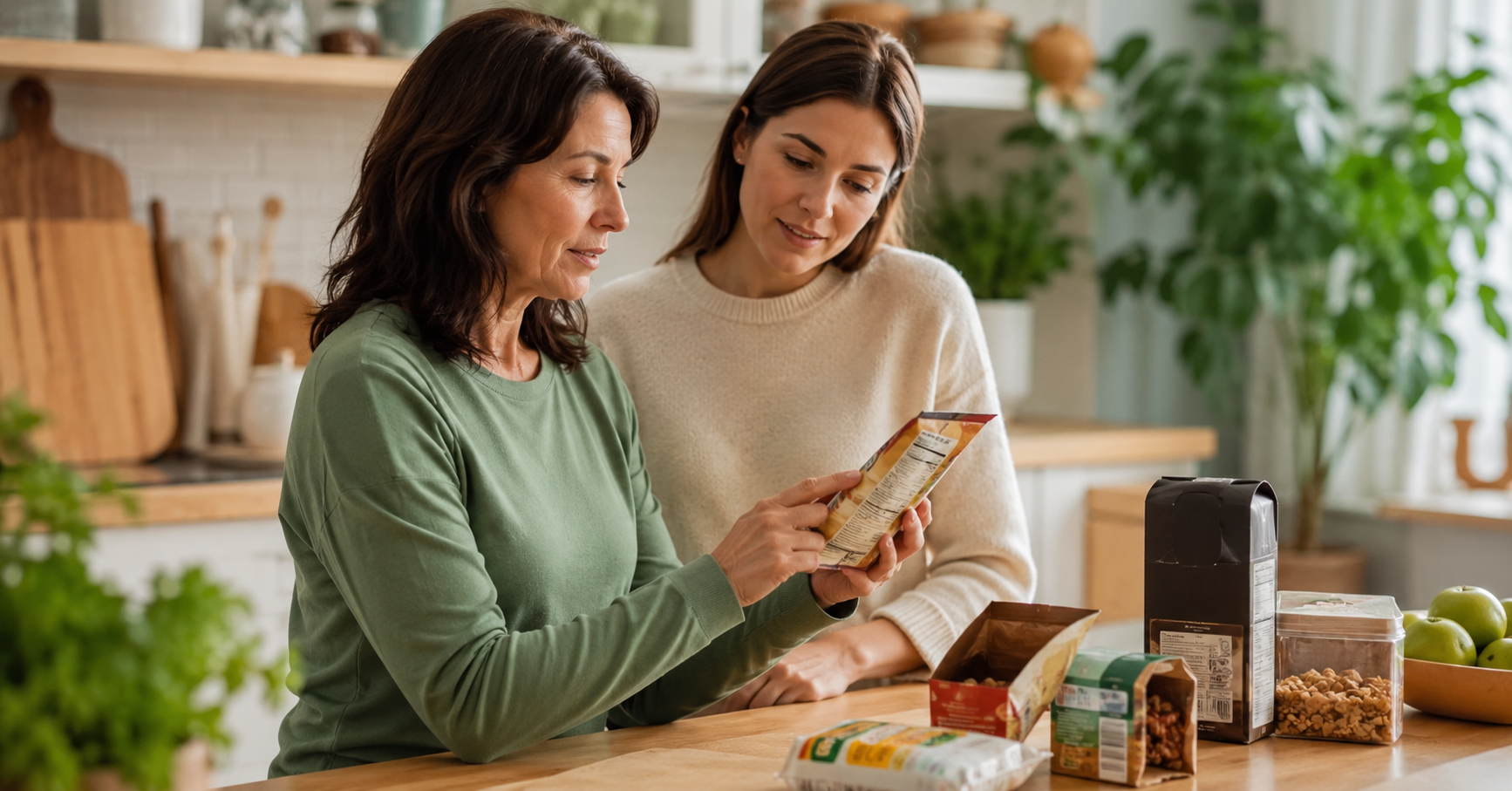
How to Support Someone with a Nut Allergy: What Friends and Family Actually Need to Know
Someone in your life has a nut allergy, and you want to get it right.
Maybe it came up at a work lunch, mentioned almost in passing. Maybe it is a new partner's kid, or a college roommate, or a friend who finally brought it up after years of quietly managing it around you. You want to help. You just are not totally sure what that means yet, or what you are probably getting wrong without realizing it.
This is the guide for that gap.
Peanuts and tree nuts are not the same allergy
This one catches most people.
Peanuts are legumes. They grow underground, botanically closer to beans than to nuts. Tree nuts are almonds, cashews, walnuts, pistachios, pecans, hazelnuts, and several others. Someone can be allergic to peanuts only, tree nuts only, or both. Some people with a peanut allergy are completely fine with almonds. Some people with a cashew allergy can eat peanut butter without any issue.
Do not assume. The right move is to ask the person directly: which are you allergic to? Most people with food allergies have answered this question hundreds of times and will appreciate that you asked instead of guessing.
"May contain" is not a cautionary label. It is a disclosure.
When a package says "may contain peanuts" or "produced in a facility that also processes tree nuts," the manufacturer is telling you that the equipment or facility used to make this product also handles those allergens. Trace amounts may have ended up in the bag.
For people with mild sensitivities, some "may contain" products are fine. For people with more serious allergies, they often are not. This is one of the most useful things to understand, because it changes how you read every ingredient label in your kitchen. The FDA's recent work on standardizing these disclosures is worth knowing about if you want to understand what these labels are actually communicating.
The practical point for a host or a friend: do not assume a "may contain" product is safe without asking the person first. They will tell you.
Cross-contamination happens in places you would not think to look
If you slice walnuts on a cutting board and then chop vegetables on the same board without washing it, there is now walnut residue on those vegetables. That is cross-contamination. It can also happen through shared cooking oil, a knife that went from peanut butter to jam, or a serving spoon that touched something almond-topped earlier in the meal.
Most people are not thinking about any of this when they cook. You do not need to be anxious about it. You do need to know it exists.
If you are cooking for someone with a nut allergy, the short version is: start with a clean surface and clean tools, and check every ingredient label individually, including the things you would not expect. Sauces, dressings, certain granola bars, flavored coffees, and even some cooking sprays can contain nut derivatives. The hidden sources are not obvious until someone has shown you the list.
Severity is unpredictable, and past reactions are not a reliable guide
This is the part that surprises people most.
Someone who has had mild reactions in the past cannot assume their next reaction will also be mild. Reaction severity depends on the dose of allergen, how it was consumed, what else the person ate, and factors like exercise and illness. None of which are easy to predict. This is why people with nut allergies carry epinephrine even when they have never had a severe reaction. It is not excessive caution. It is how anaphylaxis works.
What this means for you: do not calibrate your care to how serious you have seen their reactions look. Take the allergy seriously because the person takes it seriously.
What feels helpful but is not
A few common moves worth knowing about, all of them coming from a good place:
"Can't you just pick the nuts out?" Once nuts have been cooked into something or shared a surface with other ingredients, picking them out does not undo the contact. The problem is the proteins, which have already transferred.
Making the allergy the main event. Most people with nut allergies want to eat something safe and then talk about something else. The most considerate thing you can do is handle the food side quietly and in advance so the meal can just be the meal.
Trusting "nut-free" on a label without thinking about the facility. A product labeled nut-free met the criteria for that claim at the time of packaging. That is different from a product made in a facility where nuts have never been in the building at all. The gap between those two things is meaningful to a lot of people with serious allergies.
The most useful thing you can do: pick one specific job
The most helpful people in someone's life with a food allergy are not the ones who say "I'll be more careful." They are the ones who name one specific thing they will do and do it consistently.
The candy bowl at work becomes something you quietly replace. The birthday order goes to a bakery you have confirmed handles nut-free requests. The dinner you are hosting gets a short conversation in advance about what works and what does not. These things are small. They also add up to someone with an allergy spending a lot less energy managing the world around them.
You do not need to do everything. You need to do one thing well.
If you are hosting: ask before you cook
Before you make anything, ask the person which nuts they are allergic to, how strict they need you to be, and whether "may contain" products work for them or not. Most people with food allergies have a clear and practiced answer to these questions. They have been doing this their whole lives. They are not expecting a perfect meal. They are expecting you to ask.
A few things that make a real difference: clean surfaces and utensils before you start, ingredient labels checked individually (including sauces and condiments), and at least one dish on the table you are confident they can eat without worrying.
Finding food you can actually trust
If you want to bring something safe to an event, send a gift, or stock snacks that you know work, the most reliable shortcut is to look for products from a dedicated nut-free facility. This means peanuts and tree nuts are not present in the building where the food is made, not managed on shared equipment, not processed on adjacent lines. Just not there.
NutFreeMarket carries products exclusively from vendors who operate dedicated nut-free facilities. Every brand on the platform meets that standard. It is a good starting point when you want to give something or serve something without second-guessing it.
Frequently Asked Questions
What is the difference between a peanut allergy and a tree nut allergy?
Peanuts are legumes that grow underground; tree nuts are almonds, cashews, walnuts, pistachios, pecans, and others. The two allergies are immunologically unrelated. Someone can have one without the other. Always ask the person directly which they are allergic to rather than assuming the answer.
What does "may contain peanuts" or "may contain tree nuts" mean on a food label?
"May contain" is a cross-contact warning. It means the product was made in a facility or on equipment that also handles the named allergen, and trace amounts may be present. Whether it is safe depends entirely on the individual's sensitivity level. Do not assume it is fine without asking the person with the allergy first.
How serious is a nut allergy?
Nut allergies can range from mild to life-threatening. One thing most people do not know: a history of mild reactions does not predict the severity of future ones. Reaction severity depends on dose, individual factors, and circumstances that are not always predictable. This is why people with nut allergies carry epinephrine regardless of past reaction history.
What is the safest way to prepare food for someone with a nut allergy?
Ask them in advance which nuts they are allergic to and how strict they need you to be. Start with clean surfaces and utensils. Check every ingredient label individually, including sauces, dressings, and condiments. The hidden sources are often in products you would not think to check.
What is a dedicated nut-free facility, and why does it matter?
A dedicated nut-free facility is one where peanuts and tree nuts are never present, not just managed carefully on shared equipment, but entirely absent from the building. For people with serious nut allergies, products from dedicated facilities carry significantly less risk than products with "may contain" disclosures. NutFreeMarket requires every vendor on the platform to operate from a dedicated nut-free facility.