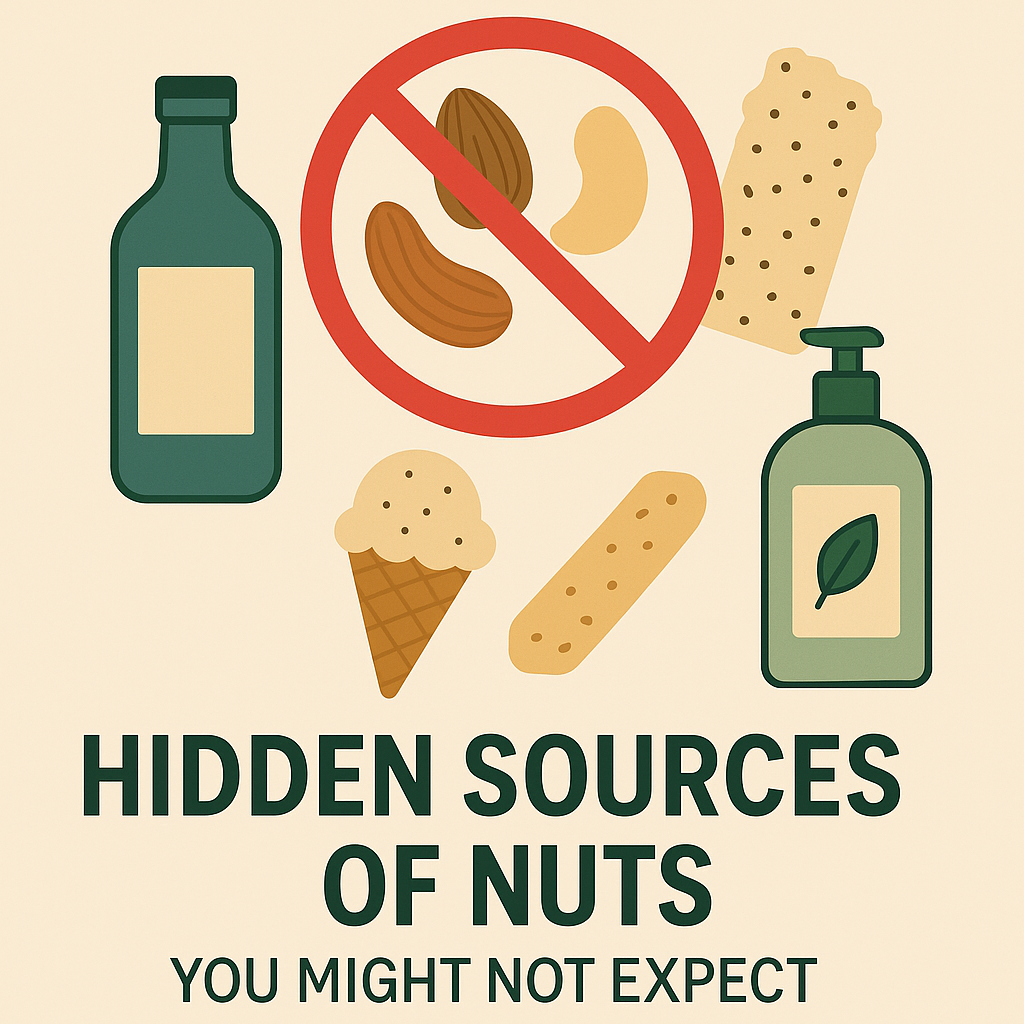
Hidden Sources of Nuts You Might Not Expect — Protecting Your Nut-Free Life
From sauces to skincare, discover the surprising places nuts can sneak in—and how to stay safe without missing out.
You’d never guess that your daily smoothie, fancy lotion, or even your soft armchair could hide nuts that derails your nut-free safe zone—yet they often do. Let’s unravel the hidden sources of nuts in places you might not expect.
1.
Sauces, Dressings & Marinades
From BBQ to pesto sauce, tree nuts can hide in plain sight to enrich flavor and texture.
- Pesto, marzipan, nougat, gianduja, turrón, pralines, Nutella—these are frequent nut-heavy suspects.
- Barbecue sauces, marinades, cold cuts may contain nut derivatives used as thickeners or flavor enhancers.
2.
Desserts, Baked Goods & Snacks
Even normal-sounding bakery items can conceal nut-based ingredients or have cross-contamination.
- Cookies, cakes, pastries (e.g., baklava) may be decorated or baked with nut flours, marzipan, or almond paste.
- Chocolate, granola, energy bars, and ice cream—typical to be processed with nuts or made with nut milks and sauces.
3.
Vegan & Dairy-Free Alternatives
It’s not just animal-free replacements that pose unexpected risks.
- Vegan cheeses, yogurts, smoothies, even kale chips and granola bars can rely on cashew-based ingredients.
- Many dairy-free products are made with almond or cashew bases—so check labels closely.
4.
Coffee & Beverages
Your café run might harbor surprises.
- Flavored drinks—like nut-flavored coffees or liqueurs (e.g., amaretto, Frangelico).
- Cross-contact at coffee shops is can happen when nut milks are used or equipment isn’t cleaned between orders.
5.
Personal Care Products
Yes—unfortunately nuts don’t just hide in food!
- Lotions, shampoos, soaps, deodorants can use nut-derived oils such as almond oil, or walnut oil.
- Even stuffed toys or cushions may use crushed nut shells as stuffing—a risk for airborne exposure or contact reactions.
6.
Cross-Contact & Environmental Risks
Hidden nut proteins can sneak into unlikely places.
- Sponges, utensils, oven trays, buffet lines all pose cross-contact hazards. It is possible for shared cooking surfaces to transfer traces unknowingly.
- Processing environments, storage, transport may expose ingredients to nut contamination even before they hit the shelf.
7.
Ethnic Cuisines
Rich, flavorful cuisines often rely on nuts—but you can still safely enjoy them with care.
- Asian, African, Indian, Vietnamese, Chinese, Middle Eastern cuisines frequently use nuts in sauces, curries, dressings, or as garnishes. Woks and cookware can get reused, boosting cross-contact risk.
- Middle Eastern sweets like baklava are notorious for pistachio or walnut use.
Closing Empowerment & Guidance
Living nut-free doesn’t mean living hidden from life’s pleasures. But thriving safely means knowing where nuts can sneak in—and taking smart, simple steps:
- Always read labels and look for nut processing disclaimers. This helps catch hidden ingredients and cross-contact warnings.
- Call manufacturers or restaurants ahead of time. Confirm how they prepare their food and whether nut-free practices are in place.
- Choose simple meals when dining out. Fresh foods with limited amounts of sauces or shared prep reduce risk.
- Check personal care products. Nut oils can be just as problematic as edible sources.
- Have an allergist-informed plan. Carry epinephrine and know what to do in an emergency.
With due diligence, curiosity, and smart strategies, your nut-free life can be full, delicious, and—above all—safe!
At NutFreeMarket we are building more than just a marketplace. We’re creating a community where families, food lovers, and allergy-conscious shoppers can feel safe, supported, and confident in every choice they make. Together, we’re proving that living nut-free can be not only safe—but also joyful, delicious, and empowering.
Next, check out these blogs on How to Read Food Labels for Hidden Nuts, as well as 10 Nut-Free Brands the Allergy Community Swears By
This article is for informational purposes only and is not a substitute for professional medical advice. Always consult with your healthcare provider or allergist regarding any questions or concerns about managing nut allergies.