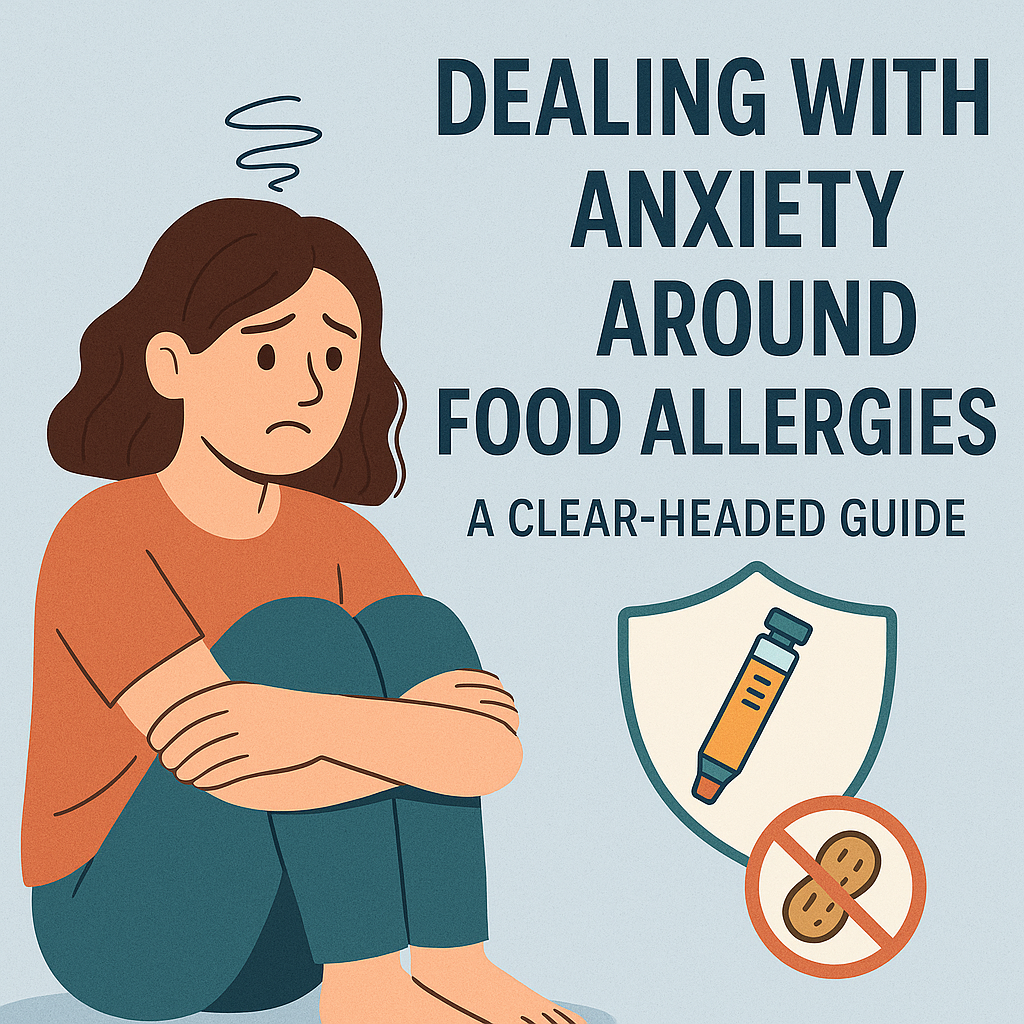
Dealing with Anxiety Around Food Allergies: A Clear-Headed Guide
Imagine this: you’re sitting at a table, scanning a menu, feeling the familiar knot in your stomach. That knot is anxiety. And if you’re living with a nut allergy, or caring for someone who is, you know it all too well. But you don’t have to let it run the show.
Why anxiety shows up with food allergies
From recent research we know that living with a food allergy isn’t just about avoiding a food—it also carries a mental load. For instance, a survey of 1,680 people in the Food Allergy Research & Education (FARE) Patient Registry found that 62 % of participants reported mental‐health concerns related to their food allergy.
Another review noted that the link between food allergy (FA) and anxiety is driven by FA‐specific fears—like “Will I accidentally eat the allergen?”—rather than a general predisposition to anxiety.
And it’s not just kids: adults with food allergies face anxiety too.
In short: the physical risk carries a psychological risk. But you can manage the latter.
Where that anxiety comes from
- Uncertainty and vigilance – You must always read labels, ask questions, trust other people. That constant alertness wears on you.
- Fear of accidental exposure – The possibility of a reaction creates underlying tension. That’s real: parents report 92 % have been “always or occasionally fearful” for their child’s safety with food allergy.
- Social and lifestyle impact – Going out to eat, traveling, socializing: all bring extra layers of worry. (See our post: “Eating out safely: How to navigate restaurants with a nut allergy”
- for more on this.)
- Emotional load – Tired of being vigilant. Tired of explaining. Tired of carrying an epipen. It adds up.
- Physical interplay – Stress and anxiety may even increase gut sensitivity, affect inflammation, and make the body more reactive.
Good news: Anxiety is manageable
You don’t have to live under the shadow of worry. Here are concrete steps.
1. Name the fear
Write down the specific worries: “What if I misread a label?”, “What if someone serves me something with nuts without knowing?”, “Will this reaction get worse?”
By bringing clarity you reclaim power.
2. Build your action plan
Clear rules = less guesswork.
- Always carry your epipen and know how to use it.
- Have a “safe food” list for each eating outing or travel.
- Check in with your physician or allergist and know your reaction-history.
- Incidentally, if you need help with the first days after a diagnosis, our guide “What to do right after a nut-allergy diagnosis”
- is designed for that stage.
3. Practice mental hygiene
- Set “worry time” — say 10 minutes a day to review or better manage fears, then move on.
- Use mindfulness or breathing to bring yourself into the present moment.
- Consider structured therapy — targeted CBT (cognitive behavioral therapy) has been shown to reduce food allergen-related anxiety.
4. Normalize & share
Join an allergy support group. Talk with others. Realizing you’re not the only one worrying takes a chunk off the weight.
According to FARE, despite two-thirds of respondents reporting mental-health concerns, only ~1 in 6 patients had received help for it.
5. Turn anxiety into a tool not a trap
A moderate amount of anxiety is useful: it keeps you reading labels, asking questions, staying alert. The goal is not eliminating anxiety entirely but managing it so it serves you rather than controls you.
As FARE puts it: “Anxiety around food allergies is not something to ignore. It is a common response… but with the right resources, it is nothing to be afraid of.”
Specific scenarios & how to de-stress
- Traveling: Bring allergy-safe snacks, double-check airline/airport protocols, have translations ready (if abroad). See our full travel guide: “How to travel nut-free: airline, hotel & food tips”
- Eating out: Before you go, call the restaurant, ask about cross-contact, plan for how you’ll handle it. See: “Eating out safely with nut allergies”
- At work/social life/travel: You’ll face buffet lunches, snacks in the break room, team events. Having a “safe fallback” food you bring helps. For more: “Adulting with nut allergies: How to thrive in work, travel, and relationships ”
- Reaction happens: Know your emergency plan, share it with close contacts, keep calm. (See: “How to handle an allergic reaction: What to do when it happens”).
The big takeaway
Anxiety doesn’t mean you’re weak. It means you’re managing something serious. The scan of the menu, the read of a label, the mental check-in—they’re all part of being safe. But you don’t have to live in high alert mode every moment.
Build your protocol. Lean on your community. Use tools. And gradually shift your mindset: from “I must constantly fear” to “I am prepared, alert, and capable”.
Disclaimer: This blog post is for informational purposes only and does not constitute medical or psychological advice. Please consult a qualified health professional for diagnosis and treatment of food allergies or anxiety.